

Sawing Machine
Why Choose Us?
Rich Experience
Yantai Haige Machine Tools Co.,Ltd. was built in 1999,which is mainly producing series WXC Centerless Lathe(Bar Peeling Machine). Based on more than ten years manufacture and design experience,our machine have been exported to Russia,Vietnam,India,Korea and other countries and regions.
Wide Range of Applications
Our machine are widely used in application fields:Bright steel;Hydraulics;Machining;Auto Parts;Springs;Fasteners;Bearings;Non-ferrous Metals,such as copper,titanium,magnesium,aluminum,etc.
Reliable Product Quality
We always feel that all success of our company is directly related to the quality of the products we offer. They meet the highest quality requirements as stipulated in ISO9001, ISO14000:14001 SGS guidelines and our stringent quality control system.
Continuous Innovation
We have been constantly updating the products design and manufacturing process and introducing advanced processing equipment, which can fit the end-user's experience much better and keep high production capacity at the same time.
A sawing machine is a device for cutting a material bar or cutting the shape of a circular material plate. Cutting tools for sawing machines can be divided into several types, thin metal discs with teeth at the edges, thin metal blades, or flexible belts with teeth at the edges, and thin grinding wheels. These tools can all have the function of sawing. Sawing can be divided into friction-created melting, grinding, or cutting.
-
![Circular Disc Saw Machine For Carbon Steel Bar]() Circular Disc Saw Machine For Carbon Steel BarThis saw machine is developed on the basis of the original circular saw machine, compared with the original one, it has the following advantages: (1) Most structure has a major improvement and...read more
Circular Disc Saw Machine For Carbon Steel BarThis saw machine is developed on the basis of the original circular saw machine, compared with the original one, it has the following advantages: (1) Most structure has a major improvement and...read more -
![High Efficiency Intelligent Metal Circular Saw Machine HGSA-70]() High Efficiency Intelligent Metal Circular Saw Machine HG...The WXC series of center-less lathe and JY series of straightening machines are high -level new equipment with independent intellectual property rights on the basis of absorbing and digesting...read more
High Efficiency Intelligent Metal Circular Saw Machine HG...The WXC series of center-less lathe and JY series of straightening machines are high -level new equipment with independent intellectual property rights on the basis of absorbing and digesting...read more -
![Vertical Milling Machine For Sales]()
-
![Vertical Milling Machine in Bangladesh]()
-
![Vertical Milling Machine in Pakistan]()
-
![Vertical Milling Machine]() Vertical Milling MachineThe main structural parts are made of high-grade castings, and the machine tool has good rigidity; The guide rail adopts a rolling-sliding composite structure, and the machine tool runs smoothlyread more
Vertical Milling MachineThe main structural parts are made of high-grade castings, and the machine tool has good rigidity; The guide rail adopts a rolling-sliding composite structure, and the machine tool runs smoothlyread more -
![High Speed Circular Saw Cutting Machine With Auxiliary Device]() High Speed Circular Saw Cutting Machine With Auxiliary De...High-Speed Metal Circular Saw Machine I.machine composition This equipment mainly by machine bed, power head, feed system, clamping device, automatic feeding device, bearing frame, material...read more
High Speed Circular Saw Cutting Machine With Auxiliary De...High-Speed Metal Circular Saw Machine I.machine composition This equipment mainly by machine bed, power head, feed system, clamping device, automatic feeding device, bearing frame, material...read more -
![Bar Cutting Circular Saw Machine CNC Control]() Bar Cutting Circular Saw Machine CNC ControlThis equipment mainly consists of lathe, power head, feeding system, clamping device, automatic feeding device, bearing frame, material feeding device, hydraulic system, electrical system, spray...read more
Bar Cutting Circular Saw Machine CNC ControlThis equipment mainly consists of lathe, power head, feeding system, clamping device, automatic feeding device, bearing frame, material feeding device, hydraulic system, electrical system, spray...read more -
![Circular Saw Machine For Metal Bar Cutting]() Circular Saw Machine For Metal Bar CuttingThis saw machine is developed on the basis of the original circular saw machine, compared with the original one, it has the following advantages: (1) Most structure has a major improvement and...read more
Circular Saw Machine For Metal Bar CuttingThis saw machine is developed on the basis of the original circular saw machine, compared with the original one, it has the following advantages: (1) Most structure has a major improvement and...read more -
![Saw Machine Steel Bar Cutting Machine]() Saw Machine Steel Bar Cutting MachineThis equipment mainly consists of lathe, power head, feeding system, clamping device, automatic feeding device, bearing frame, material feeding device, hydraulic system, electrical system, spray...read more
Saw Machine Steel Bar Cutting MachineThis equipment mainly consists of lathe, power head, feeding system, clamping device, automatic feeding device, bearing frame, material feeding device, hydraulic system, electrical system, spray...read more -
![Circular Saw Steel Bar Cutting Machine]() Circular Saw Steel Bar Cutting MachineThis saw machine is developed on the basis of the original circular saw machine, compared with the original one, it has the following advantages: (1) Most structure has a major improvement and...read more
Circular Saw Steel Bar Cutting MachineThis saw machine is developed on the basis of the original circular saw machine, compared with the original one, it has the following advantages: (1) Most structure has a major improvement and...read more -
![Steel Plating Sawing Machine Milling]() Steel Plating Sawing Machine MillingCNC Steel Plate Sawing and Milling Machines are currently in a monopoly state by foreign countries, and in China it is still in the early stage of research and development. Ningshing Hengli dared...read more
Steel Plating Sawing Machine MillingCNC Steel Plate Sawing and Milling Machines are currently in a monopoly state by foreign countries, and in China it is still in the early stage of research and development. Ningshing Hengli dared...read more


Advantages of Sawing Machine
Minimum Energy Consumption
The main purpose behind using sawing machines is it has a longer life and faster cutting. Carbide-spiked blades are sharper and remain sharp way longer than steel substitutes because of their heat resistance and great wear. A sharper edge means less damage and shattering with the premium feed rates. It doesn’t require changing your blade as constantly, also saves time and money for the long term.
Speed
Sawing machines are much faster than other power tools, such as miter saws or jigsaws, at completing tasks. This means that using a sawing machine allows you to complete your projects more quickly and efficiently.
Finest surface finish for the secondary applications
With the durability and tough structure of the blade, the edges of the blade can stay sharp for a long duration. As you know, a sharp edge is capable of making clean and smooth cutting. It helps to cut various applications smoothly due to the sharp cermet/carbide tips.
Hardened blade for repeatable accuracy
The primary benefit of using a sawing machine blade instead of the band saw blade is its capability to have fast and repetitive accurate cuts with an excellent surface finish. These saw blades are inflexible and capable of pushing through the material efficiently.
Longer blade life
Sawing machine blades are able to long last for thousands of cuts. You not only will gain an advantage in cut times but also gain time from not changing a blade, unlike your competitor. Let your competitors change blades while your production works are going for delivery.
Precise cuts
Sawing machines are ideal for precision work such as building cabinets or cutting trim pieces for furniture because they make clean, straight cuts.
Versatility
Sawing machines are capable of cutting a wide range of materials, including wood, metal, and plastic. As a result, they are extremely versatile and useful for a wide range of projects.
Increased productivity
People are tired of wasting money on saw blades with less life span. Sawing machine blades are worth investing in. They stick sharper for an extended period. The benefit is that dreaded blade switches happen less often and it allows the saw to keep running and your operator can focus on more important tasks.
Types of Sawing Machine

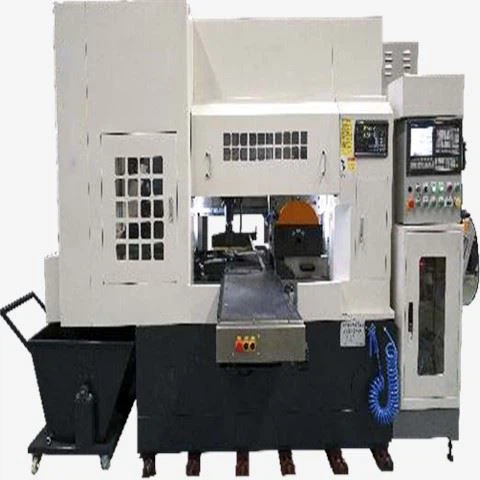


Table Saw
The table saw is a machine with a large circular saw blade and a high-speed running motor. The operation mode is that the operator pushes the wood object against the sawtooth circular blade rotating at a high speed at a fixed position to perform the cutting process. The table saw can be replaced with different types of saw blades according to different needs. It can also adjust the lifting and angle of the saw blade. It is common and easy to operate a sawing machine.
Circular Saws
The circular saw is a versatile saw machine that is easy to carry, in other words, a portable table saw. The circular saw can select the appropriate circular saw blade according to the materials to be cut, and the working principle of a circular saw is just opposite to the table saw. The operation of the circular saw is to move the machine. The piece is close to and to cut the stationary object.
Miter Saw
The miter saw is designed to adjust the angle of the cutting cut. In other words, when you need a specific and precise angle, you will need a miter saw for forming and trimming. The two sides of the miter saw can be rotated 45 degrees, and the addition can be performed for 90 cutting. Hand-held miter saws are usually paired with a miter box.
Oscillating Saw
The blade of the oscillating saw can perform precise cutting work in a limited space. The oscillating saw can not only handle the cutting work, but also grinding, removing grout or caulk, and scraping work.
How Does Sawing Machine Works?
First of all, let me tell you what "saw" mean: A saw is a tool consisting of a tough blade, wire, or chain with a hard toothed edge. It is used to cut through material, very often wood though sometimes metal or stone. The cut is made by placing the toothed edge against the material and moving it forcefully forth and less forcefully back or continuously forward. This force may be applied by hand, or powered by steam, water, electricity, or other power sources. An abrasive saw has a powered circular blade designed to cut through metal or ceramic.
The most commonly used materials like steel, aluminum, brass, plastics, etc. are available in standard sizes and shapes. But before the metal is presented to a machine tool it is usually cut to some specified length and operation of cutting is generally performed by sawing. Therefore, metal sawing is chiefly concerned with cutting bar-stock to convenient length for machining.
The circular sawing process is performed by rotating a blade that can be operated horizontally or vertically or at a specific suitable angle.
A sawing machine is a device for cutting a material bar or cutting the shape of a circular material plate. Cutting tools for sawing machines can be divided into several types, thin metal discs with teeth at the edges, thin metal blades, or flexible belts with teeth at the edges, and thin grinding wheels. These tools can all have the function of sawing. Sawing can be divided into friction-created melting, grinding, or cutting.
Due to the rigidity of the machine and the cutting blade, the circular sawing process is highly accurate. The circular sawing process produces a burr-free surface that reduces the need for secondary precision machining.
For any beginner, the journey begins with learning how to use a circular saw without cutting themselves. The safety and the expertise combined give a successful result. So, first, learn to use it with proper care following these step-by-step instructions.
● Mark the line you wish to cut and measure it.
● Use a workstation to clamp it tightly so that it doesn’t slip while you are cutting it.
● Check which blade would be appropriate for the cut and attach it to the saw accordingly.
● Keep the depth of the blade 1/4 inches underneath the material you want to cut.
● Check the bevel angle.
● Attach the battery of the saw or plug it into a power source.
● Set the shoe of the saw at the cutting material’s edge right next to the line you have marked to cut.
● Raise the blade guard.
● Keep the blade next to the workpiece without touching it.
● Click on the lock switch and set the saw at its full speed.
● Make sure the shoe is on the surface firmly. Keep the trigger engaged as you move forward in an easy motion towards the marked line.
● Keep the shoe flat and move the circular saw alongside the scrappy portion of the marked line.
● Don’t push the saw with force as it can harm the motor.
● To stop, unpress the trigger. Once done, keep the saw back at its place.
Tips to Buy the Right Sawing Machine for Your Job
Consider the Type of Blade
The type of blade you choose will depend on the material you intend to cut. There are different types of blades, including those for cutting wood, metal, and masonry. If you plan to cut wood, then a carbide-tipped blade is ideal. For metal cutting, a blade with fewer teeth is better, while a diamond blade is suitable for masonry and concrete cutting.
Blade Size
The size of the blade you choose will depend on the depth of the cut you need to make. A larger blade will cut deeper, and a smaller blade will cut shallower. Most sawing machines come with a blade size of between 5–1/2 to 7–1/4 inches. If you plan to cut thicker materials, then a larger blade is ideal.
Power
The power of the sawing machine is measured in amps or volts higher amps also mean the saw will consume more electricity and generate more heat, which can lead to faster wear and tear and potentially overheat the motor. If you plan to cut through thick materials, then a saw with a higher power rating is ideal. However, keep in mind that a more powerful saw will be heavier and may be more challenging to handle.
Ergonomics
The ergonomics of the saw are essential, especially if you plan to use it for extended periods. Look for a saw with a comfortable grip that is easy to hold. The weight of the saw is also crucial, and you should choose one that is easy to handle.
Safety Features
It is important to follow all safety guidelines and precautions when using power tools to prevent accidents and injuries. Look for a sawing machine with safety features such as a blade guard that covers the blade when not in use. The saw should also have a safety switch that prevents accidental start-up.
Brand Reputation
The brand reputation is also an essential factor to consider when buying a sawing machine. Look for a reputable brand that has a track record of producing high-quality tools. Read reviews from other users to get an idea of the saw’s performance and reliability.
Function Of Vertical Milling Machine
Milling
The primary function of a vertical milling machine is milling, which involves removing material from the workpiece using rotary cutters. The spindle rotates the cutting tool, such as an end mill, while the workpiece is fed against it. This allows precise shaping, contouring, and sizing of the workpiece.
Drilling
Vertical milling machines can also perform drilling operations. By using drill bits, the machine can create holes of various sizes and depths in the workpiece. The spindle speed and feed rate can be adjusted to accommodate different materials and hole requirements.
Boring
Vertical milling machines are capable of boring operations, which involve enlarging existing holes or creating cylindrical holes with precise dimensions. Boring heads can be attached to the spindle, allowing the machine to remove material and create accurate internal diameters.
Tapping
With the appropriate tooling, vertical milling machines can perform tapping operations. Tapping involves creating internal threads in a hole by using a tap. The machine controls the spindle speed and feed rate to ensure precise thread creation.
Slotting
Vertical milling machines can be used to create slots or grooves in the workpiece. A slitting saw or a specialized slotting cutter can be used to cut through the material and create slots of varying widths and depths.
Contouring and profiling
Vertical milling machines enable the creation of complex shapes and profiles on the workpiece. By using different cutting tools and controlling the machine's movements, intricate contours, bevels, and chamfers can be achieved.
Surface finishing
The vertical milling machine can be used to achieve smooth surface finishes on the workpiece. By selecting appropriate cutting tools and controlling the feed rate, the machine can remove small amounts of material, improving the surface quality.
Facing
Vertical milling machines can perform facing operations, which involve creating a flat surface on the end of a workpiece. This can be useful for achieving perpendicularity or for preparing the workpiece for subsequent machining operations.
What Is the Difference Between Vertical and Horizontal Milling Machines?
Spindle Orientation
The primary difference lies in the spindle orientation. In a vertical milling machine, the spindle is positioned vertically, perpendicular to the worktable. This vertical orientation allows for the downward movement of the cutting tool and the workpiece, facilitating precise and controlled machining. In contrast, a horizontal milling machine features a horizontally oriented spindle parallel to the worktable. The cutting tool and workpiece move along a horizontal plane.
Versatility and Milling Operations
Vertical milling machines are known for their versatility, as they can perform a wide range of milling operations. The vertical orientation allows them the use of various cutting tools to create complex shapes, angles, and contours. Vertical mills also excel in drilling and tapping operations. Vertical milling machines often utilise long and thin tools, making them ideal for more intricate and precise cutting. Horizontal milling machines, while more specialised in their cutting, are highly efficient for certain applications. They excel at grooving, slotting, and cutting material at angles. They most commonly use shorter, thicker tools, enabling them to excel at these milling operations. In summary, vertical milling machines are renowned for their flexibility, allowing for diverse milling operations. In contrast, horizontal milling machines are better suited to more heavy-duty tasks with less need for accuracy.
Components of a Milling Machine
A milling machine is a versatile machine tool that can perform a variety of machining operations. It consists of several components that work together to produce accurate and precise parts. The following are the main components of a milling machine:
Spindle
The spindle is the heart of the milling machine. It is responsible for rotating the cutting tool and providing the necessary power to cut the material. The spindle is typically driven by an electric motor and can rotate at different speeds depending on the material being cut and the size of the cutting tool.
Table
The table is the work surface of the milling machine. It is typically made of cast iron and can be moved in different directions to position the workpiece. The table can also be tilted to create angled cuts.
Ram
The ram is a vertical component that moves back and forth on the column. It supports the milling head and can be adjusted to different heights to accommodate different size cutting tools.
Knee
The knee is a vertical component that supports the table. It can be adjusted up or down to provide additional support and stability to the workpiece.
Base
The base is the foundation of the milling machine. It provides a stable platform for all the other components and is typically made of cast iron.
Milling Head
The milling head is the cutting tool that rotates on the spindle. It can be replaced with different cutting tools to perform different machining operations.
Worktable
The worktable is the surface on which the workpiece is placed. It can be moved in different directions to position the workpiece for machining.
Arbor Support
The arbor support is a component that supports the milling head and the cutting tool. It can be adjusted to different heights to accommodate different size cutting tools.
Materials for Milling Machine
Metal
Milling machines are often used to work with metals, such as cast iron and carbide. These materials are hard and require a lot of force to be removed. Carbide is particularly difficult to machine due to its hardness and brittleness. Milling machines can be equipped with special tools and techniques to work with these materials effectively.
Wood
Wood is another common material that can be milled using a milling machine. Wood is softer and easier to work with than metal, which makes it a popular choice for milling. Milling machines can be used to create intricate designs and shapes in wood, making it a popular choice for furniture makers and woodworkers.
Plastics
Plastics are also commonly milled using a milling machine. Plastics come in a variety of types and grades, each with its own unique properties. Some plastics are more difficult to machine than others, but milling machines can be equipped with special tools and techniques to work with these materials effectively.
Applications of Sawing Machines
Sawing machines are versatile machines that can be used for a variety of applications across different industries. Here are some of the common applications of sawing machines:
Industry
Sawing machines are widely used in the industry for cutting, shaping, and drilling metals and other materials. They are used to create precision parts for machinery, molds, and other industrial applications. sawing machines can also be used for creating custom parts and prototypes.
Aerospace
In the aerospace industry, sawing machines are used for creating complex parts for aircraft engines, landing gear, and other components. The precision and accuracy of sawing machines make them ideal for creating parts that need to meet strict industry standards.
Automotive
Sawing machines are used in the automotive industry for creating engine blocks, cylinder heads, and other parts. They are also used for creating molds and dies for the production of car parts. sawing machines are ideal for mass production of parts due to their ability to create parts quickly and accurately.
Machine Shop
Sawing machines are a staple in machine shops, where they are used for creating precision parts for a variety of applications. Machine shops use sawing machines for creating custom parts, repairing damaged parts, and creating prototypes.
Mass Production
Sawing machines are commonly used for mass production of parts due to their ability to create parts quickly and accurately. They are used in industries such as automotive, aerospace, and manufacturing, where large quantities of parts need to be produced quickly and efficiently.
Our Factory
The company is based on the manufacturing plant---Yantai Haige Machine Tools Co.,Ltd & Yantai Hangjian Refined Special Steel Equipment Co.,Ltd. whose area is more than 20000m² . There are 140 staffs working in the factory. The factory is mainly engaged in producing and selling bar peeling machines(centerless lathes), straightening machines, polishing machines(abrasive belt machines), auxiliary machines and other processing and finishing equipment for steel(bright steel) for more than ten years.

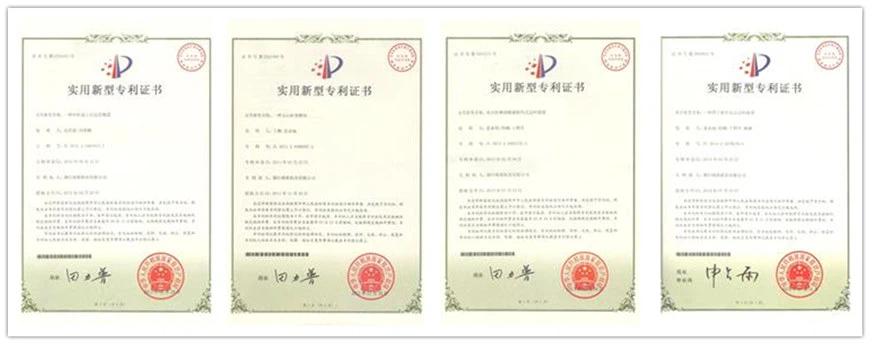
Our Certifications

Ultimate FAQ Guide to Rolling Mill
Q: What are the 4 types of sawing machines?
Q: What is the procedure of sawing?
Q: What is the definition of a sawing machine?
Q: Is there a best sawing method?
Q: What is the most common method of sawing wood?
Q: What tool is used for sawing?
Q: What are the different types of sawing machines?
Q: What is sawing operation commonly used for?
Q: What are the different types of saw machines?
Q: Which method of sawing is done very quickly?
Q: What is the most economical method of sawing?
Q: What is the difference between sewing and sowing?
Q: What are the 4 methods for cutting wood?
Q: Which sawing method produces the most stable lumber?
Q: What is a circular sawing machine?
Q: What are the different types of crosscut saws?
Q: What is the principle of sawing?
Q: What is the most economical method of sawing?
Q: What method of cutting lumber is more stable and expensive?
Q: What are the different types of saw machines?
We're well-known as one of the leading sawing machine manufacturers in China, featured by quality products and good service. Please feel free to buy high speed sawing machine made in China here from our factory.
SS Bar Peeler, Bearing Steel Bar Peeling Machine, Semi Automatic Steel Coil Peeling Machine