

Turning Machine
Why Choose Us?
Rich Experience
Yantai Haige Machine Tools Co.,Ltd. was built in 1999,which is mainly producing series WXC Centerless Lathe(Bar Peeling Machine). Based on more than ten years manufacture and design experience,our machine have been exported to Russia,Vietnam,India,Korea and other countries and regions.
Wide Range of Applications
Our machine are widely used in application fields:Bright steel;Hydraulics;Machining;Auto Parts;Springs;Fasteners;Bearings;Non-ferrous Metals,such as copper,titanium,magnesium,aluminum,etc.
Reliable Product Quality
We always feel that all success of our company is directly related to the quality of the products we offer. They meet the highest quality requirements as stipulated in ISO9001, ISO14000:14001 SGS guidelines and our stringent quality control system.
Continuous Innovation
We have been constantly updating the products design and manufacturing process and introducing advanced processing equipment, which can fit the end-user's experience much better and keep high production capacity at the same time.
A Turning Machine is a machine that turns workpieces into various shapes. This process involves rotating a part while a single-point cutting tool moves parallel to the axis of rotation. The process can be performed on the external or internal surface of the workpiece. In most cases, the starting material is a workpiece generated by other processes. However, some parts may require secondary processes such as polishing or platonic solids.
-
![Valve Head Turning Machine]()
-
![Valve Radius Turning Machine]()
-
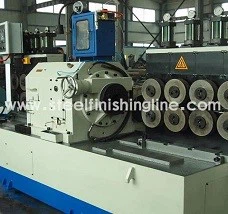
![High Speed Bar Turning Machine]() High Speed Bar Turning MachineBar turning machine is suitable for processing all kinds of materials of round bars,tubes,wire rods,such as structural steel,alloy steel,spring steel,bearing steel,tool steel and other ferrous...read more
High Speed Bar Turning MachineBar turning machine is suitable for processing all kinds of materials of round bars,tubes,wire rods,such as structural steel,alloy steel,spring steel,bearing steel,tool steel and other ferrous...read more -
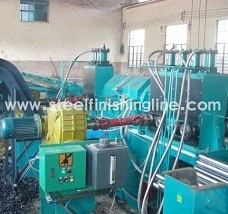
![CNC Turning Lathe Machine]() CNC Turning Lathe MachineBar peeling machine belongs to centerless turning lathe.The supply scope of CNC turning lathe contains complete set production line such as bar peeling machines,bar straightening machines,bar...read more
CNC Turning Lathe MachineBar peeling machine belongs to centerless turning lathe.The supply scope of CNC turning lathe contains complete set production line such as bar peeling machines,bar straightening machines,bar...read more -
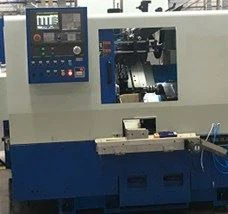
![Horizontal CNC Lathe Turning]() Horizontal CNC Lathe TurningHorizontal CNC Lathe turning which is running with high speed,high precision and low price.We will make the technical specifications cooperated with your requirements and confirm the lathe type.We...read more
Horizontal CNC Lathe TurningHorizontal CNC Lathe turning which is running with high speed,high precision and low price.We will make the technical specifications cooperated with your requirements and confirm the lathe type.We...read more


Advantages of Turning Machine
Increased Productivity
One of the primary advantages of turning machines is that they can help to increase productivity. This is because turning machines are designed to perform various tasks, including cutting, sanding, and drilling. As a result, lathe operators can complete tasks more quickly and efficiently than hand tools.
Greater Accuracy
Another advantage of turning machines is that they can provide greater accuracy than hand tools. This is because turning machines allow for more precise cuts and drilling, which can help to improve the quality of the finished product.
Increased Safety
Turning machines can also help to increase safety in the workplace. This is because turning machines are designed to minimize the risk of injuries by reducing the need for workers to handle sharp tools. Additionally, turning machines are equipped with safety features that can help to prevent accidents.
Reduced Costs
Turning machines can also help to reduce costs in the workplace. This is because turning machines are designed to be more efficient than hand tools, which can reduce the amount of time and materials needed to complete a task. Additionally, turning machines require less maintenance than hand tools, which can reduce costs further.
Improved Quality
Finally, turning machines can also help to improve the quality of the finished product. This is because turning machines allow for more precise cuts and drilling, which can help improve the finished product’s overall appearance and function.
Types of Turning Machine

Engine Lathe
Engine lathe is the most common type of lathe found in any machine shop. They are typically classified by the largest diameter of the workpiece that can be spun over the bed. Engine lathes are perfect for various workpieces, including shafts, discs, and cylindrical parts.
Center Lathe
Center lathes, also known as bench lathes, resemble engine lathes in many ways. The critical difference, however, is the lack of a spindle nose for attaching a chuck in a centre lathe. Instead, these machines use a tailstock to support one end of the workpiece, making them highly suitable for long cylindrical parts.
Turret Lathe
Turret lathes are advanced lathe machines that can handle complex cuts at high production rates. They feature an automated tooling system consisting of a revolving 6-8 station tool post that can be stocked with numerous tool holders. Turret lathes are commonly used in industries like screw manufacture, where high productivity is required.
Computer Numerical Control (CNC) Lathe
CNC lathes are advanced machining tools that are controlled by computers. They feature a computerized graphical interface that allows users to input complex designs and instructions for the machine to follow. CNC lathes are perfect for high-precision turning operations and ideal for creating intricate parts and components in the aerospace, medicine, and robotics industries.
Metal Lathe
A metal lathe is a crucial tool for the experienced machinist. This machine is designed to shape and cut metal into precision pieces, allowing for intricate designs and tiny details. With its ability to hold and rotate the metal workpiece, the lathe is a versatile tool that can produce anything from simple cylindrical shapes to complex 3D designs. While mastering the metal lathe may take some practice, the results are unparalleled in precision and accuracy. For any severe metalworker, a metal lathe is a valuable investment that can significantly enhance their craft.
Swiss-Type Lathe
Swiss-type lathes are high-precision machines that are designed for the production of small intricate parts. They feature a sliding headstock that can hold specialized tools for machining small pieces, making them highly suitable for precision turning in medical, electronics, and watchmaking industries.
Application of Turning Machine
Woodturning
Used to make wooden objects such as ornate table legs, baseball bats, wooden bowl, and platters; operators use a variety of tools to form.
Metalworking
Used to create precision parts; most often associated with a multistep process requiring different tools for each step.
Metal Spinning
A process where metal spins on a spindle, while the operator works it with tools; an automated process.
Acrylic Spinning
Involves spinning acrylic on a spindle to form items from acrylic; most often used in the making of the top pieces for trophies.
Thermal Spraying
Combines the rotating spindle with the painting process; the paint sticks to the stock via processes involving heating the paint materials.
Pottery
By using a potter’s wheel, artisans can make a variety of pottery pieces; though formed mainly by hand, craftspersons also use tools.
The Main Components of the Turning Machine
Bed
The bed of the lathe machine serves as the foundation upon which all other components are installed. The bed is supported by large box-section columns and is made of cast iron or a nickel cast iron alloy. The bed itself is mounted on the legs which are bolted to the ground.
Headstock
The headstock is mounted on the left side of the lathe bed. Its primary duty is to transmit electricity to the components. It is a housing for a spindle where a chuck or live centre is provided that holds one end of the workpiece as it rotates. Also, it contains a necessary transmission system with levers for changing speeds.
Lathe Chuck
Chucks are specialised clamps made to hold objects having radial symmetry such as cylinders. They typically have jaws to secure the workpiece. The jaws (or dogs) are organised in a star-like configuration with radial symmetry.
Lathe Spindle
An essential rotating part of a headstock is the spindle. It contains a shaft that transfers rotary motion to the chuck, thereby turning the workpiece. It is supported by two sets of angular contact ball bearings to help handle both radial and axial loads.
Tailstock
The tailstock is a moveable casting opposite to the headstock that is mounted on the guideways on the bed. It holds tools for operations like drilling, reaming, tapping, etc., and supports the opposite end of the workpiece during machining. It includes the dead centre, adjustment screws, and handwheel.
Dead Centre
The workpiece is held in place while it is rotating using a dead centre (not freely rotated, i.e., dead). There may be friction on the dead centre due to the rotation of the workpiece when employed in the stationary position. The pointed end of it is placed touching the other end of the workpiece to avoid an abrupt stop in rotation and reduce friction.
Carriage
The carriage can be found in the area between the tailstock and headstock. During operation, the carriage serves as a guide, supports, and feeds the tool against the workpiece. The following parts are on the carriage.
Saddle
It is cast in the shape of an H and installed on top of the lathe. It supports the cross-slide, the compound rest, and the tool post. Manual or automatic feeding is employed to move the saddle.
Cross Slide
It is positioned on the saddle such that it is perpendicular to the bed. One side of the cross slide is equipped with a female dovetail, and it is joined on top of the saddle using its male dovetail. The cross slide hand wheel is turned to move the cross slide at a right angle to the axis of the lathe.
Compound Rest
The compound rest joins the cross slide with the compound slide using a tongue-and-groove joint. It supports the cutting tool and tool post during the drilling of short tapers and shapes on forming tools.
Tool Post
The tool post is mounted on the compound rest and is used to carry cutting tool holders. The holders are supported by a wedge with a bottom that fits into a ring with a concave surface. It is attached to the upper slide. The tool post is positioned on the top of the compound slide to securely hold the tools.
Apron
An apron is the front section of a carriage. It includes all control keys. The apron is made up of split nuts that engage with the lead screw when cutting threads, as well as gears and clutches for transferring motion from the feed rod to the carriage.
Leadscrew
A leadscrew is used as a linkage in a machine to convert turning motion into linear motion. It is also referred to as a power screw or translation screw. The lead screw in a lathe machine is used to move the carriage along with the revolution of the spindle. Using various gears between the lead screw drive and spindle, threads can be created.

With the knowledge of the components of the turning machine, we will be able to understand the working principle of the lathe. This remains common to all types of lathes with some minor changes. The working principle involves rotating a workpiece against a fixed cutting tool. As seen in the figure above, the chuck (live centre) and the tailstock (dead centre) hold the workpiece to be machined. The tool is moved horizontally or vertically along the surface of the workpiece to create circumferential (cylindrical) or deep cuts respectively. The tool is moved in an inclined plane along the vertical to produce tapered surfaces on the workpiece. Apart from this, normal cutting operations are performed on the lathe as the workpiece is firmly fixed between the centres.
A Guide to Buying a Turning Machine
Power
Most modern turning machines are powered by a geared headstock. This is attached to a carriage for longitudinal movement and a cross slide for axial motion. The geared headstock drives a series of changeable gears, and this in turn provides plenty of power to the rotating spindle. Depending on the type of work being done, you'll need different types of accessories. For example, if you're turning long shafts, you'll need a steady rest. This bolts to the bed of the turning machine and supports the shaft while you're working on it. You'll also need a live center and a dead center to hold the workpiece in place. For the tailstock, you'll want a three-jaw or four-jaw chuck. You can also add a faceplate to work on larger pieces that cannot be held in the tailstock.
Stability
Before purchasing a new turning machine, machinists need to decide what type of work they will be doing with the tool. turning machines are divided into a few categories, including engine turning machines and turret turning machines for metalwork and woodworking turning machines for other projects. When deciding what kind of turning machine to purchase, shop owners must also consider the size and geometry of the parts they plan on producing. For example, if a project requires a long, slender shaft, it's best to buy a turning machine that can accommodate this length or consider an addition of a tailstock to the machine.
Safety
A turning machine is probably the most important machine tool in any shop. In fact, anything that involves moving or round parts probably has a part made by a turning machine somewhere in its construction. This makes it a vital tool for the engineer to have, and one that requires careful consideration when buying. First of all, the size of the workshop is a major factor in what type and size lathe to buy. There is little point in buying a large, expensive lathe that will only be used for small jobs. On the other hand, a smaller, cheaper machine might be left unattended and unused for long periods of time. In this case, the value of the machine may drop significantly in comparison to its original purchase price.
How to Navigate Cnc Turning Machines
When navigating CNC turning machines, there are five basic steps that you should follow to ensure safety for both worker and machine. Below are the steps to follow
Power DOWN your CNC turning machines
To avoid unnecessary workplace accidents, be sure that the machine is completely powered down (meaning, there should be ZERO chance that it might accidentally run or else this could harm workers and damage the machinery).
Place the part SECURELY
Tighten the screws properly.
Choose and place your preferred tool
This type of CNC machine is able to utilize and perform a variety of machining techniques. To do so, you need to use tools and this machine is able to cater a wide range of tools. All you need to do is to identify the tools that should be used for that design and load it to the tool turret.
Check if the tools are neatly and properly placed
Before turning the machine on, be sure to check thoroughly – adjust the tools accordingly if needed. Check it through the machine's learning eye. Warm the machine first before proceeding – test its speed and accuracy. Once the tools are positioned correctly, rest assured that the operation will go smoothly as expected. Remember, incorrect positioning of the tools could lead to collision and in turn, damage the tools.
Upload the program to the CAD/CAM System
Once everything is secured – and is technically safe to operate – load up the program and allow the machine to execute the uploaded instructions. If it is properly maintained, you will be guaranteed with a timely production with accurate and precise work-pieces.
Tips to Increase Your CNC Turning Machine Longevity
Clean Work Areas
The build-up of collected grime, residue, and excess dirt during the manufacturing process could guarantee turning machine breakdown and accidents. The practice of keeping the workspace (and turning machines) clean by simply removing excess chips and debris produced would prevent possible equipment damage and serious worker accidents. It may seem irrelevant prior damages are caused, but this action, as tiny as it could be from others’ perspective, could save your organizations’ manufacturing performance as it eliminates possible turning machine downtime and saves on repair costs.
Invest
There is this one idiom that would be considered dangerous for the organization’s operation – “The Blind leading the Blind” – turning machines that are expensive and require a slightly huge amount of money should be treated with utmost caution. Operators that are tasked to perform the work should be highly knowledgeable and are properly trained to handle such turning machinery. Knowledge on proper usage and maintenance should be a basic requirement for the people appointed to do the task. Training your employees on the basic and proper practices on operating and maintaining the CNC turning machine – simple tasks such as, choosing the proper lubricant and replacing the fill cap, could impact the turning machines’ longevity. Failure to identify the proper lubricant for your turning machine and non-replacement of fill caps will result in serious turning machine damage, thus haltering your operation (plus, repair costs or worse – replacement).
Do Not Skip Routine Maintenance
Much like humans, turning machines require maintenance. turning machines that experience zero maintenance are prone to breakdowns and damage resulting in total breakage. Having trained operators that work with your turning machines is one thing, but always contact a reputable repair technician for professional evaluation and diagnosis for your turning machines. Be proactive in your actions – practice preventive maintenance on your turning machines and only let professionals perform the task rather than attempting to evaluate, conclude diagnosis, and conduct repair on your own. This practice could do more harm than good for your turning machines and decrease your CNC turning machines’ longevity. Adopt the practice of conducting daily, bi-annual, and annual maintenance in your organization and this will guarantee the increase of your CNC turning machines’ longevity.
Functions of a Turning Machine
The Turning Machine is an example of a simple computer program. Its head can perform one task when in state 1 and another task when in state 2. When the machine is in state 1, it can exchange the position of two strings, while when it is in the other state, it will do nothing. Similarly, when in state 2, it will do two different tasks, and vice versa. If the halt state is not defined, the machine will stop. A Turning machine is a computer program that is capable of recognizing different kinds of problems. These programs are written in languages that describe the problem. For instance, the computer program “one” might compute the value of every string of one’s. For example, it could make the machine write a 1 whenever it moves to the right. The computer would then always move to the right. Similarly, it could make the machine write a 0 when it moves to the left.
Essential Safety Measures for Turning Machine Operation
Prioritizing safety in turning machine operation is paramount. Always wear appropriate personal protective equipment (PPE) such as safety goggles, gloves, and protective clothing to shield against potential debris or material splinters. Familiarize yourself with emergency stop procedures and the correct handling of tools. Keep the work area well-lit, clean, and free from clutter to prevent accidents. Regularly inspect and maintain the lathe machine to ensure it functions safely and efficiently, and always follow manufacturer-recommended guidelines for operation.
Our Factory
The company is based on the manufacturing plant---Yantai Haige Machine Tools Co.,Ltd & Yantai Hangjian Refined Special Steel Equipment Co.,Ltd. whose area is more than 20000m² . There are 140 staffs working in the factory. The factory is mainly engaged in producing and selling bar peeling machines(centerless lathes), straightening machines, polishing machines(abrasive belt machines), auxiliary machines and other processing and finishing equipment for steel(bright steel) for more than ten years.

Our Certifications


Ultimate FAQ Guide to Turning Machine
Q: What is CNC machining a comprehensive guide?
Q: What is the working principle of turning machine?
Q: What are the elements of turning machine?
Q: What is the importance of turning machine?
Q: What are the cutting parameters of turning operation?
Q: What is CNC turning machine basic knowledge?
Q: How many types of CNC turning are there?
Q: Which type of tool is used in turning?
Q: What is cutting speed in turning machine?
Q: How many types of turning are there?
Q: What are the rules for machine safety?
Q: What is the cutting tool used in a turning operation called?
Q: What is the depth of cut in turning machine?
Q: What is the difference between turning and rotating?
Q: How many edges does a turning tool have?
Q: How do you calculate cutting speed in turning?
Q: What is the difference between milling and turning?
Q: What is the theory of lathe machine?
Q: Why is milling better than turning?
Q: Is CNC turning or milling?
We're well-known as one of the leading turning machine manufacturers in China, featured by quality products and good service. Please feel free to buy high speed turning machine made in China here from our factory.
CNC Ss Bar Peeling Machine, bring bar peeler